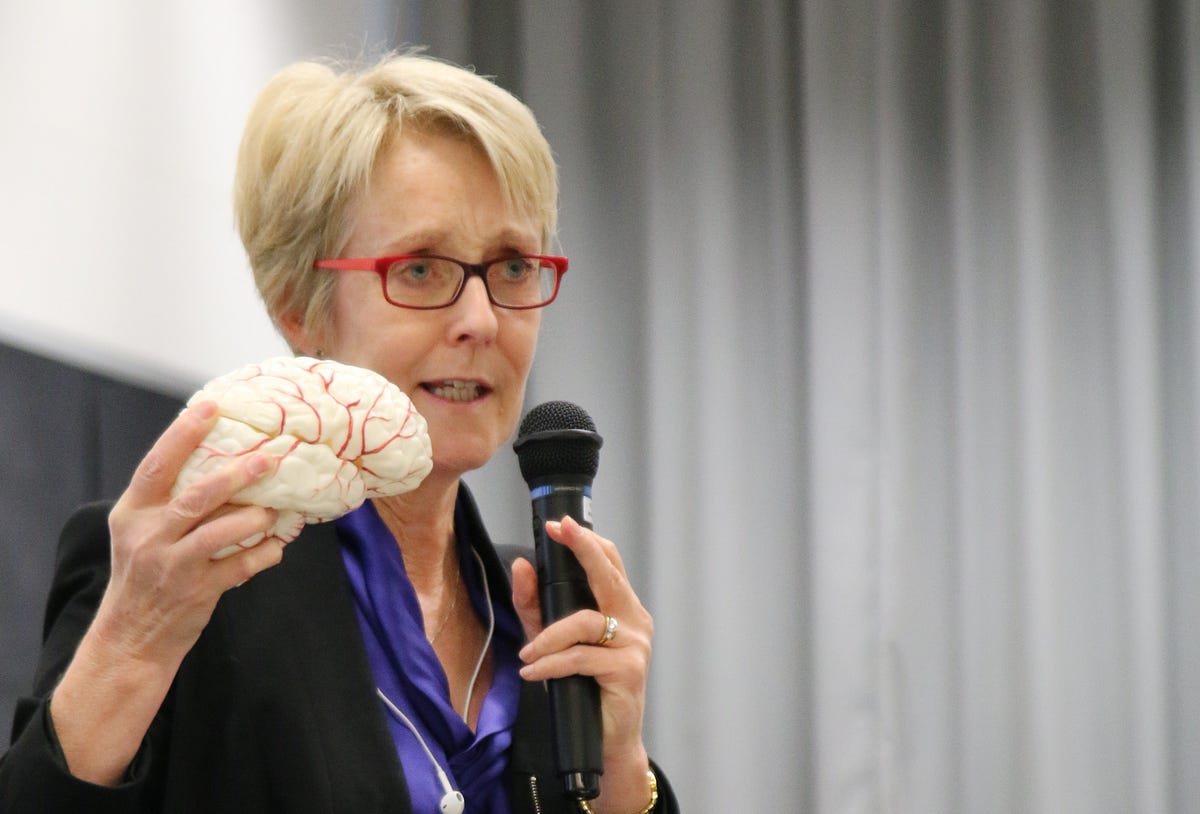
Dr. Jenny Brockis
If you ask your working friends which part of the work day do they like most, it’s very likely they’ll say “when I get off work”, or “lunch time”, or “hanging out at pantry waiting for coffee / gossiping time”, right? You’ll never hear anyone say “I like the time when it’s packed with tasks handed down to me by my boss”.
We may not like the time when we’re stuck at work, but as adults, we know we’ll have time after work for ourselves… to relax, to do what we like to do, eating good food, playing badminton, watching movies. We value our down time. But what about our children? It’s not unusual to hear children as young as 8 doing homework till 11 o’clock at night these days. Why is it that we adults get to relax after work but children are forced to work after school? “All work and no play makes Jack a dull boy.” How’s this lifestyle affecting our children?
Last Saturday (December 5th), we were very lucky to have Dr. Jenny Brockis coming all the way from Perth, Australia, to share with us her latest findings on brain health. Her new book “Future Brain” had just been named Book of the Week by The London Times and Irish Times. In her talk, Dr. Brockis showed us some of the “best practises” based on the latest brain research, used by schools and advised to parents overseas. She gave us four basic tips to help our brain to perform well:
- Eat unprocessed food that contains Omega-3 fatty acid.
- Get your heart rate up — workout for 30 — 60 minutes everyday.
- Sleep! The brain does its maintenance and store what we learn into long-term memory when we sleep. Have some sort of relaxing routine an hour before we sleep — reading, listening to soft music, getting a massage… etc.
- Laugh. Laughing and being in a good mood relaxes the body and send more oxygen to the brain.
The talk had raised a lot of concerns for parents in the audience and they were able to ask Dr. Brockis after her talk. One thing that many parents worry about is the kind of pressure that’s being put on our children these days. Some people would say that it’s fine because we’re preparing them for their adult life which will be full of stress and pressure. However, Dr. Brockis warned that chronic, un-ending stress in children, whose brains are still developing, can actually cause long-term, life-long damage to their brains! To learn more, check out the recorded video below.
We want to thank Mr. Stuart Patton, chairman of Finnish Chamber of Commerce Education Committee, and founder of POLKUNI, for bringing Dr. Jenny Brockis to Hong Kong. In the second part of the talk, Stuart expanded upon Dr. Brockis’s talk, relating it to Hong Kong’s situation, and shared some examples of how the Finnish education system has been changing and adapting with the times, rather than getting stuck in an archaic system like Hong Kong is.
Nicholas Wang
Dec. 7th, 2014